Health & Wellness

Volunteers needed for Gresham's 2010 Regional Trail & Sidewalk User Survey: Sep 14-15, 18-19

Volunteers wanted for Gresham's 2010 RegionalTrail & Sidewalk User Survey: Sep 14-15, 18-19. Sign-up info here!

How many people bike, walk, and skateboard on Gresham streets & trails?

Help conduct counts or surveys on trail & sidewalk use in Gresham as part of a nationwide effort

Be counted!
Even if you don't volunteer, please show-up and be counted at one of the locations below if you bike, walk, skateboard, or rollerblade on the trails or streets in the Gresham area. Ed.

Volunteers needed

Gresham is participating in a nationwide effort to document the number of people biking, walking, skateboarding, and rollerblading on trails and local streets. As part of that effort, City staff is asking for volunteers to help conduct counts and surveys.

The counts will be conducted September 14th, 15th, and 16th from 7 to 9 a.m. and 5 to 7 p.m., and September 18th and 19th from 9 to 11 a.m. The City has identified 18 locations where counts will be taken:

  • Marine Dr & I85th Ave
  • 181st Ave & Halsey St
  • Halsey St & 201st Ave
  • Gresham Fairview Trail & Burnside Ave
  • 181st Ave & Division St
  • 181st Ave & Powell Blvd
  • Springwater Trail & Pleasant View Dr
  • Burnside Ave & 223rd Ave
  • Powell Blvd & 223rd Ave
  • Springwater Trail @ Main City Park
  • Cleveland Ave & 5th St
  • Springwater Trail & 242nd/ Hogan Rd
  • Stark St & Kane Dr
  • Kane Dr & Division
  • Kane & Powell Valley
  • 282nd Ave & Lusted Rd
  • 181st & Glisan St
  • 181st & Stark St

Click here for a map of these locations.

Count or Survey?

Volunteers can choose to conduct counts or conduct a short survey. The surveys well help provide information on trip distance, why people use trails, and what types of trials they prefer.

Your participation in this effort will help the City gain valuable information on walking and bicycling:

  • Baseline data: How many people are biking? Walking? Where? What are the volume trends from year to year?
  • What is the return on investment in bike lanes, trails and sidewalks: How many people use bike/pedestrian facilities after they are built?
  • How can safety be improved: Certain locations have high numbers of bike/pedestrian crashes, but what is the risk exposure rate? Is it high or low relative to bike/pedestrian volumes? How should safety improvements be prioritized?

Click here to volunteer!

One Day Free Health Care Clinic, Medical/Dental, Vision, more: May 22, 2010 9AM-3PM

05/22/2010 - 9:00am
05/22/2010 - 3:21pm
Etc/GMT-8
One Day Free Health Care Clinic; Medical/Dental, Vision, and more: May 22, 2010 9AM-3PM. Info here!

Under-insured, unemployed? Needing healthcare services?

Attend this Free1-Day
Health Fair!
Saturday, May 22nd

When: Saturday May 22, 2010 9:00AM - 3:00PM
Where: Portland Lutheran School
740 SE 182nd
Gresham, OR
Get Map!

Free Clinic

This year is the 5th year for Compassion Rockwood, an all day FREE health event where doctors, dentist, and more get together in one location to help under-insured members of the greater Rockwood / West Gresham area. No appointment necessary. Simply show up and attend.

This years services include:

  • Basic Medical Exams
  • Basic Emergency Dental Treatments
  • Dental Cleaning (ages 3-18 only)
  • Basic Chiropractic Exams
  • Vison Care
  • Social Service Fair
  • Childrens Activities
  • City of Gresham Disaster Preparedness Education
  • And more!

This clinic is limited in the services, therefore we are asking that only members of the community with a real need for care attend, especially in the area of dental. Guests are not required to disclose their income level or make a commitment to give back to their community through volunteering.

Free event! "Green Grows Your Garden and Gresham" Saturday, April 17 11AM-3PM

04/17/2010 - 11:00am
04/17/2010 - 3:00pm
Etc/GMT-8
Free event! 'Green Grows Your Garden and Gresham' Saturday, April 17 11AM-3PM  Info here!

Celebrate Earth Day
Free event!
Green living tips, fun crafts, and more

Saturday, April 17th 11AM-3PM

When: Saturday, April 17, 2010 11AM-3PM
Where: The Center for the Arts Plaza
between NE 2nd & 3rd on NE Hood St
Gresham OR
Get Map!

"Green Grows Your Garden and Gresham"

In the spirit of Earth Day, don’t miss “Green Grows Your Garden and Gresham,” a free, activity-filled community event from 11AM to 3PM green living tips and ideas for adults, and fun crafts and learning for children. Talk with local experts about growing your own food, gardening and composting, trees, water quality, and more.

Celebrate Earth Day 2010, Free recycling and fun activities: Apr 24, 2010 9AM-2PM

04/24/2010 - 9:00am
04/24/2010 - 2:00pm
Etc/GMT-8
Celebrate Earth Day 2010 Saturday April 24th 9AM=2PM at Gresham City Hall, 1333 Eastman Pky.  Recycling event for Gresham & Wood Village residents.  Free activities for all ages!  Info here!

Earth Day Celebration
and Recycling Event!

Saturday April 24th

When: Saturday, April 24, 2010 9AM-2PM
Where: Gresham City Hall
1333 NW Eastman Pky
Gresham, OR
Get Map!

Join us as Gresham celebrates the 40th Anniversary of Earth Day on Saturday April 24th 2010 from 9AM to 2PM.

Activities include a free recycling event and free celebration with fun for all ages! (Complete information below)

Green living booths & tips. Native plant sales. Build fun crafts. Live entertainment & food!

Open to all Gresham and Wood Village residents.

Volunteers Needed to Count Gresham Street & Trail Users: Sep 8-13, 2009

09/08/2009 - 4:00pm
09/08/2009 - 6:00pm
Etc/GMT-8
How many people bike, walk, and skateboard on Gresham streets & trails? Volunteers Needed to Count Users, Sept 8-13, 2009. Info here!

How many people bike, walk, and skateboard on Gresham streets & trails?

Volunteers Needed to Count Users, Sept 8-13

Regional Streets and Trails User Count and Survey

Gresham is participating in a nationwide effort to document the number of people biking, walking, skateboarding, and rollerblading on trails and local streets. As part of that effort, City staff is asking for volunteers to help conduct counts and surveys.

Dates and Times

4 to 6PM on Sept. 8, 9, 10 (Tues, Weds, Thurs)

Noon to 2PM on Sept. 12 and 13 (Saturday, Sunday)

Sign up now!

To volunteer contact Jonathan David at 503-618-2321 or Jonathan.David@GreshamOregon.gov . Leave your name, phone number and e-mail address, a preferred day, and if desired, the location where you would like to volunteer.

Count Locations

The City has identified 18 locations where counts will be taken:

1. Marine Drive at I-85
2. 181st Avenue at Halsey Street
3. Halsey Street at 201st Avenue
4. Gresham-Fairview Trail at Burnside Road
5. 181st Avenue at Division Street
6. 181st Avenue at Powell Boulevard
7. pringwater Trail at Pleasant View Drive
8. Burnside Avenue at 223rd Avenue (Eastman Parkway)
9. Powell Boulevard at 23rd Ave (Eastman Parkway)
10. Springwater Trail at Main City Park
11. Cleveland Avenue at Fifth Street
12. Springwater Trail at 242nd Avenue/Hogan Road
13. Stark Street at Kane Drive
14. Kane Drive at Division Street
15. Kane Drive at Powell Valley Road
16. 282nd Avenue at Lusted Road
17. 181st Avenue at Glisan Street
18. 181st Avenue at Stark Street

FREE Fix-It Fair Workshops: Jan 10, 2009

01/10/2009 - 8:30am
01/10/2009 - 2:00pm
Etc/GMT-8
22nd Annual Neighborhood, Fix-It Fair Workshops, Saturday January 10, 2009, Parkrose High School, Portland OR

FREE!
22nd Annual Neighborhood
Fix-It Fair Workshops
Saturday, January 10, 2009
8:30AM - 2PM
Parkrose High School

When: Saturday, January 10, 2009 8:30AM - 2PM
Where: Parkrose High School
12003 NE Shaver St, Portland
Click here for a map

Healthy home workshops. Energy & money-saving tips. Presented by City of Portland, Office of Sustainable Development.

What's a Fix-It Fair?

The Fix-It Fair is a FREE City of Portland event where you can learn simple ways to save money and connect with resources. Join your neighbors and talk to the experts about how to spend less and stay healthy.

Exhibits

  • weatherization
  • health & nutrition
  • water & energy savings
  • recyclying
  • yard & garden care
  • community resources

Workshops

  • learn simple and affordable ways to improve your home
  • 45 minute classes offered hourly

Free Lunch!

Free on-site professional childcare!

Door prizes every hour!

Food And Hunger In Gresham

By Janet Unruh, WENA Board Member

About five decades ago, I was recently divorced and living on my own. Although I had a college degree, I turned to “temp” work, and I was sent on interesting and challenging assignments in a variety of offices and factories. I lived on the minimum wage, which was just over three dollars per hour then. I had a studio apartment in a hip part of town—the rent was $195 per month—and a car. I never worried about money. I was able to pay the rent and all the bills. Gas for the car was $1.25 per gallon. I’d go to the ATM and get a ten-dollar bill for going out with friends. I didn’t have credit cards. That’s how affordable life was.

Today, something as basic as food is becoming unaffordable for many households. The overall inflation rate doesn’t reflect what consumers pay at the grocery store, and shoppers are changing their habits in response[1]. According to the Bureau of Labor Statistics, grocery prices in the West increased 28.7% between August 2020 and August 2026[2]. In Oregon, the cost of basic necessities has risen faster than overall national inflation, according to United For ALICE[3] (described next).

ALICE VERSUS THE FEDERAL POVERTY LEVEL
According to the World Population Review website, Gresham has a poverty rate of 13.04% as of 2026[4]. This is calculated using the Federal Poverty Level (FPL), which is used to determine eligibility for various subsidies. ALICE, which stands for Asset-Limited, Income-Constrained, Employed, is a research initiative of United For ALICE. ALICE households have incomes above the FPL, but still cannot afford basic necessities.

The ALICE Threshold includes both households living in poverty and those earning above the poverty level but unable to afford basic necessities. Using 2024 ALICE data for six ZIP codes covering Gresham and nearby communities—97230, 97233, 97236, 97024, 97030, and 97080—the combined percentage of households that fall below the ALICE Threshold is 54%[5, 6]. That’s considerably worse than Gresham’s 13.04% FPL.

WHAT IS SNAP?
SNAP (Supplemental Nutrition Assistance Program) provides monthly grocery benefits to eligible low-income households through an EBT (Electronic Benefits Transfer) card. Nearly 15% of Oregonians receive SNAP benefits. SNAP does not cover total food costs for its recipients[7]. More than 54% of SNAP participants are in families with children; more than 37% are in families that include older adults or people with disabilities; and more than 41% are in working families[8] (categories overlap). Not only does SNAP benefit recipients, it also supports Oregon’s economy. Each month, more than $123 million in SNAP benefits are spent at grocery stores, farmers markets, and other food retailers in Oregon[9].

On July 4, 2025, President Donald Trump signed the One Big Beautiful Bill Act into law—enacting major cuts to federal food and health assistance programs. The law phases in its provisions on a staggered schedule over the next decade, reducing SNAP food assistance and other subsidies[10]. As of June 2026, 126,000 fewer Oregonians were receiving federal food assistance compared to the same time last year[11].

THE 80-HOUR WORK RULE
One of the biggest changes to SNAP is the expansion of work requirements, which apply to an increasing number of Oregonians. Adults ages 18–64 without children under 14 in their household may now be subject to SNAP work requirements unless exempt. They are categorized as able-bodied adults without dependents (ABAWDs). They generally must complete 80 hours of work or approved activities, such as qualifying training or volunteer work, each month. Those who don’t meet the requirement can receive only three “countable” months of SNAP during Oregon's current three-year period, January 2025 through December 2027. The countable months don’t need to be consecutive. After three countable months, benefits generally end unless the person meets the work requirement or qualifies for an exemption[12].

Exemptions may apply to people with qualifying health conditions, caregivers, certain students, and others. Veterans, people experiencing homelessness, and former foster youth no longer automatically exempt[13, 14]. The Oregon Department of Human Services (ODHS) is encouraging people to contact the agency so staff can review their situation.

Presumably, the intent of requiring work is to reduce dependence on subsidies. However, ABAWDs don’t necessarily get a job if their SNAP benefits are cut. Research from the Urban Institute and the Hamilton Project shows that SNAP work requirements don’t boost employment but instead cause participants to drop out of the program[15, 16].

WHAT IS OREGON DOING TO HELP?
In 2026, Oregon lawmakers approved funding, computer system upgrades, and additional staff to administer SNAP and handle increased caseloads. They also approved limited, temporary assistance for immigrants who lost federal benefits. The legislators did not, however, pass bills to support the School Meals For All Initiative, or fund investments in Oregon’s Food Assistance Network[17, 18].

CAN FOOD BANKS MAKE UP THE DIFFERENCE?
Unfortunately, it looks unlikely, although they are making a heroic effort. Oregon Food Bank estimates that SNAP provides nine meals for every one meal supplied by food banks. According to Oregon Food Bank’s 2026 State of Hunger Report, food bank visits across Oregon and Southwest Washington increased 51% over the past two years, reaching 2.9 million visits last year[19].

WHAT WE CAN DO NOW
If you’re not already doing something to help, start now. There are plenty of ways to donate time, effort, food, and money. I set up a monthly donation to Thimbleberry Collaborative Farm(https://thimbleberrycollaborativefarm.org/) in Boring. It is a 501(c)(3) nonprofit that runs a five-acre organic farm. This year, they donated 12,000 pounds of produce to food pantries in East Multnomah and Clackamas Counties, operated a free food stand, and provided meals[20]. See my article in this newsletter, Thimbleberry Collaborative Farm.

SnowCap Community Charities (https://www.snowcap.org/) is a 501(c)(3) nonprofit that provides food, clothing and other basics. They distribute prepacked food plus fresh and frozen food. SnowCap brings food to low-income schools and apartment complexes to reach children whose families are unable to get to their pantry. They also deliver food boxes and fresh produce to homebound seniors once a month[21].

East County Food Pantry (https://eastcountyfoodpantry.org/) provides food to people on Saturday mornings. They serve 3,000 people per month with a variety of produce, bakery goods, and other assorted grocery items. Food is supplied by Oregon Food Bank, Urban Gleaners, Clackamas Service Center, and others. The pantry is at Smith Memorial Presbyterian Church in Fairview. You can donate and sign up to volunteer on their website. They offer short shifts of one to four hours per week[22].

CONCLUSION
Now that we know more about the immediacy of food and hunger, we need to mobilize because the problem of hunger in Wilkes East and Gresham is on a worsening trajectory, with no resolution in sight. Ultimately, when the community pulls together, we gain friends and purpose, and all of us benefit. Let’s work to restore goodwill toward others and build a sense of community solidarity.

(Endnotes below this break)

We Need Each Other: The Power of Intergenerational Solidarity in Wilkes East

We Need Each Other: The Power of Intergenerational Solidarity - What we can do right now. By G. Shawnta’ Creech, October 2026.

By G. Shawnta' Creech, WENA Contributor

When I moved to Portland in 2025, I came with a backpack, a purse, my two daughters, and a heart to serve the older adult community. I moved across the country because I fell in love with gerontology, the study of aging. I believe deeply that older adults deserve dignity, autonomy, and to be seen. But I also know my passion for aging isn't just about later life. It is about the entire life course. It's about making sure that whether you are 18 or 80, your life has purpose and your voice is heard.

I believe neighborhoods are where real change happens. They are where policy becomes personal. Right now, we are living through deeply uncertain times. The most powerful thing we can do is remember that we need each other. Not just the folks who look like us, live like us, or are the same age as us. We need the whole community.

Age Segregation Is a Lie
Our society likes to put people in age-based boxes. We put the youth in one space, working-age adults in another, and we push older adults to the margins. We treat aging like a problem to be solved, rather than a natural part of life.

But as a gerontologist, I can tell you that this segregation is a lie. When we separate generations, we lose out on the wisdom of our elders. We lose out on the energy and fresh perspective of our youth. We lose out on the middle-aged adults who know how to navigate the systems./

In a neighborhood as beautifully diverse as ours, we cannot afford to be separated. When a community is divided by age, it becomes easier to ignore the problems facing any one group. But when we are united, we are a force.

Why This Matters Right Now
We face rising costs, threats to public education, and a growing sense that the people at the top aren't listening to the people on the ground. In times like these, it's easy to retreat into our own homes and focus on our own survival.

But survival is a team sport. When the storm comes, we can't make it alone.

Look, chicken, flour, and oil are all great ingredients on their own. But you put them together right, and you've got fried chicken that is golden, delicious, and feeds a whole table. That's what a neighborhood is supposed to be. We need our youth; their fresh ideas and perspectives are valuable. We need our working-age adults; their input and insight matter. We need our older adults for more than history and wisdom; we need their resilience and power. You separate them, and you just have raw ingredients. But when you bring them together, you get a community that can actually feed and sustain itself.

What We Can Do Right Now in Wilkes East
You don't have to start a non-profi t or run for office to make a difference. You just have to be a good neighbor. Here is how we can start building intergenerational power right here today:

1. The Simple Check-In.
Isolation is one of the biggest health risks facing older adults. If you have an older neighbor, knock on their door. Ask them how they are doing. Offer to grab their mail or help them take out the trash. On the flip side, if you are an older adult, make an effort to smile and say hello to the young people in the neighborhood. A simple "good morning" bridges gaps.

2. Trade Skills and Share What You Got.
Everyone has something to teach, and everyone has something to learn. Let's create spaces in Wilkes East where generations can exchange skills. Maybe a teenager can teach an older adult how to use Zoom or a smartphone. Maybe an older adult can teach a young parent how to bake a favorite recipe or how to fix a leaky faucet. Imagine a neighborhood tool library where we share what we have instead of everyone trying to buy it alone.

3. Make Room for Everybody
When we host neighborhood events, we need to make sure they are accessible to everyone. Are there chairs for those who can't stand for long? Is there food that works for different dietary needs? Are there activities for children and activities for adults? When we plan, we should plan for the whole lifespan, not just the most vocal people in the room.

4. Show Up
If you see someone struggling in the neighborhood, don't look away. If a young person is having trouble, if an older adult needs help, if a family is struggling, be the neighbor who steps up. And when we have neighborhood meetings, show up. Your voice matters. Even if you feel like you don't know anything about city government, your lived experience is our most valuable tool.

The Power of a United Community
I have spent the last year fighting against powerful institutions that wanted to erase programs and silence voices. I have seen what happens when people refuse to give up. And I have learned that the strongest weapon we have against a system that wants to divide us is community.

When we connect generations, we build something that can't be broken. We are building a neighborhood that can weather any storm. We are building a legacy of care and community.

As my mother would say, "No man is an island." We aren't meant to do this life alone. We are meant to lean on each other and see one another.

Let's be that community here in Wilkes East. Let's take care of each other.

G. Shawnta’ Creech is a WENA contributor. She is a proud mother, a gerontologist, and a fierce advocate for older adults and working families.

Thimbleberry Collaborative Farm

Thimbleberry Collaborative Farm. Distributinge food through farm-to-clinic program and food pantries in East Multnomah and Clackamas counties. Info here!
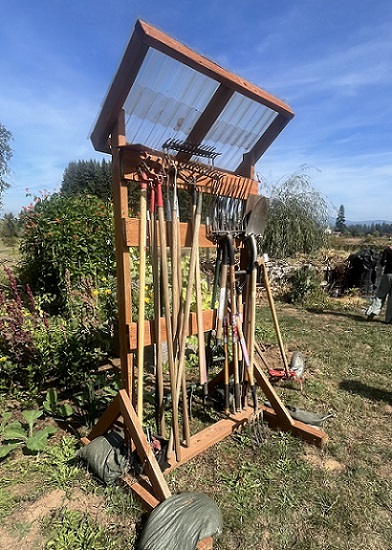
Tool rack. Click to enlarge

By Janet Unruh, WENA Board Member

My family and I visited Thimbleberry Collaborative Farm (https://thimbleberrycollaborativefarm.org/) for its fall harvest festival, and we were impressed with the operation. The farm is on five gorgeous acres just outside Boring, Oregon.

We had fresh-pressed apple cider and tacos, listened to live music, and took a tour of the farm.

I was interested in visiting because I had read that the farm donated 11,000 pounds of fresh produce to people in need in the East Multnomah and Clackamas counties (12,000 pounds last year). I learned that they distribute food through a farm-to-clinic program with Wallace Medical Concern and Milk Crate Kitchen, and to food pantries such as SnowCap, Birch, and Sandy Community Action Center. They're able to do this work with support from grants and donations as a 501(c)(3) nonprofit organization.

The farm offers educational programs for K–12 students in Multnomah and Clackamas counties, including field trips and classroom visits focused on growing and cooking seasonal produce, and environmental stewardship. Lessons are customized to each group, with hands-on activities that make learning fun. The farm also works with local organizations to provide monthly farm visits and cooking experiences for young people experiencing homelessness.

During the tour, I learned that they don't use pesticides, herbicides, or chemical fertilizers. They use low- or no-till methods and work to build the soil biome. This means a lot of work is done by hand, including weeding, harvesting, preparing sections of the farm for winter, and leaving roots in place where possible. They also grow blueberries and they have apple, plum, pear, and cherry orchards. The farm has hens and ducks, whose manure is used to improve soil fertility. The birds also help control insects.

The farm participates in an apprenticeship program through Oregon Farm Corps. Apprentices can gain hands-on experience with raising vegetables, culinary herbs, fruit, cut flowers, poultry and eggs, and managing orchards. For more information, search the Internet for “oregon farm corps host farms thimbleberry.”

I found Thimbleberry to be an unusual and worthwhile undertaking and decided to make a monthly donation. If you'd like to support their work, you can donate at givebutter.com/vNbNAN, attend an event, or volunteer. Their activities include bird-watching, pickling, winter cocktails, and more. For information about upcoming events, search the Internet for “thimbleberry events.”

Take The Time To Volunteer And Pickup Trash On Your Walks!

Take The Time To Volunteer And Pickup Trash On Your Walks! Adopt One Block.
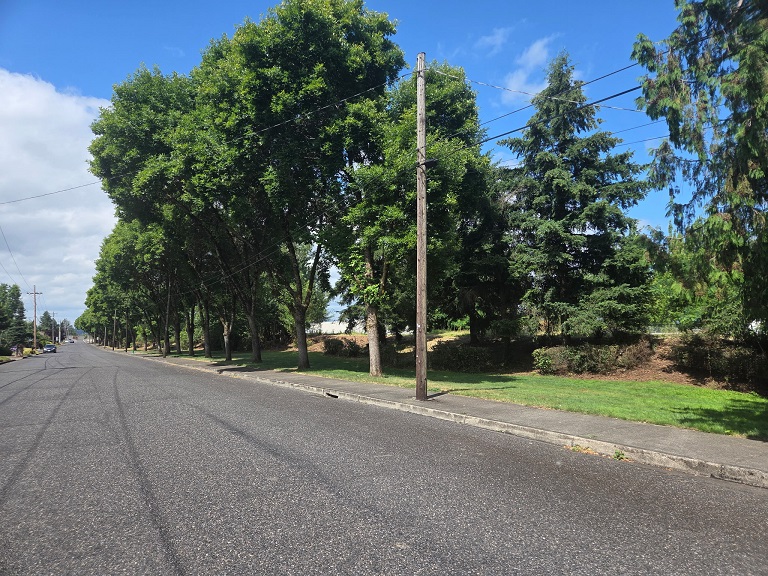
NE 169th & NE San Rafeal St

By Candee Layton
Sandstone neighbor

I volunteer with Adopt One Block. As a Block Ambassador, you’ll clean up the block(s) you’ve adopted when and how you want, with litter removal supplies they deliver to you for free.

They supply grabbers, gloves, trash bags or buckets. I walk all over, more than my block. Even if you are not a volunteer with Adopt One Block you can report dumps of garbage, furniture and other items by emailing ridpatrol@oregonmetro.gov

First- A big thank you to Mike Penner and his crew for cleaning up the walkway down San Rafael, taking donations, and spreading barkdust; also for cleaning up the tree branches that came down on NE 162nd & NE Russell St.

Next- Thank you to Albertson’s for cleaning up the berm along NE169th Ave. It took a week of trimming, pruning, sawing, raking, picking up garbage, and hauling it all away!

To learn more about Adopt One Block, or to sign-up to adopt your block visit https://www. adoptoneblock.org

Syndicate content